
IWCS Forum Highlights Emerging Trends Affecting Cable & Connectivity Technologies
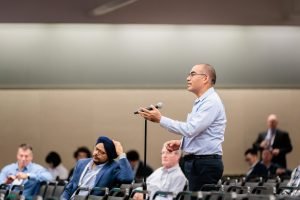
The 2025 IWCS Cable & Connectivity Industry Forum, held in Pittsburgh, Pennsylvania this October, included the traditional event components that have established the IWCS Forum as the premier event for cable and connectivity technology discussions for the past 74 years. This includes the annual Technical Symposium—which is the cornerstone of the event—Executive Session, Plenary Luncheon, Supplier Exhibition™, Professional Development Courses, and many networking opportunities. Plus, this year again featured sessions highlighting trending developments in sustainability, artificial intelligence, and smart grid infrastructure, a new feature of IWCS essential to our future strategy.
Day one of the four-day program featured insights on how artificial intelligence and machine learning offer tremendous opportunities to improve efficiency and quality in cable manufacturing and installation. Additionally, the dialogue addressed the growing need for more reliable and efficient infrastructure, from cables, connectors, and data centers to support the AI surge. During the “AI / ML for Communication Network Infrastructure” session, presenters and panelists described a range of new opportunities and capabilities that the advancements in generative artificial intelligence and machine learning bring to the world. Dr. Bianca Hydutsky, Global Technology Director of Advanced Performance Materials at The Chemours Company, and moderator of the AI-focused panel, proclaimed, “High-performance computing, edge processing, and real-time data flows require ultra-fast, ultra-reliable connections.” She continued, “Consider that AI and ML are only as powerful as the infrastructure that supports them.” As AI models grow in complexity and data demands surge, the pressure on our networks and infrastructure intensifies.
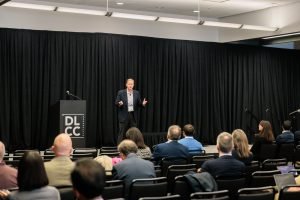 Four industry experts shared individual presentations in their areas of expertise on the AI topics. Glenn Bleiler kicked off the session with a presentation titled, “Navigating AI’s Cambrian Explosion.” As the division vice president of AI platform and products at Corning, Bleiler walked the audience through the capabilities AI has to deliver measurable impact by enhancing processes and operations throughout the cable manufacturing business.
Next, John D’Ambrosia, technical vice president of datacom standards research at Futurewei Technologies, a U.S. Subsidiary of Huawei, discussed developments to increase ethernet speeds from 800GbE to 1.6 TbE. The need for faster speeds, of course, is fueled by the AI explosion. As the chair of the IEEE P802.3dj project task force, D’Ambrosia was undoubtedly the most appropriate industry representative to have on stage for this discussion.
Continuing on the topic of faster demand driven by AI, Rich Baca, vice president of business & product development at Relativity Networks took the stage. Baca discussed how innovative hollow core fiber cables are supporting the demand that AI is placing on data centers.
The presentations concluded with a talk from Roy Kusuma, global market segment leader at Chemours. Kusuma discussed the critical role of high-performance materials used in cable design for data centers, specifically those with excellent electrical insulation properties.
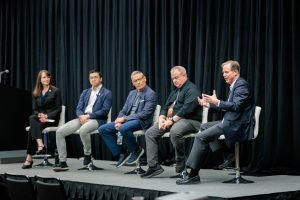
All four speakers then joined Hydutsky on stage for an intriguing panel discussion. The diverse backgrounds of the presenters helped to create a well-rounded question-and-answer segment. Some questions were posed by Hydutsky, while others were asked by audience members. Hydutsky concluded the session by declaring that the industry is presented with an opportunity and challenge to get creative to support the rapid transformation that AI is placing on data centers and their supporting infrastructure.
The next trend session in the schedule was a sequel to the Sustainability sessions that were part of the two most recent IWCS Forums. However, this year the “Sustainable Solutions for Power and Data Cables” session was extended to include additional presentations and panel discussions that extended the session to an entire day, in parallel to other ongoing technical sessions and exhibits. The session opened with five back-to-back presentations where presenters shared how their businesses are making changes that support a more circular economy. Presenters included: Joee Kvetensky, senior manager of, product compliance, CommScope; Bernard Lee, senior dir. of strategic technology & innovation, SENKO Advanced Components; Maura Nespoli, VP of sales – renewable energy & sustainability, Prysmian; Harpreet Singh, NA TS&D director, packaging & specialty plastics, Dow; and Tim Thiel, performance materials marketing, Covestro. Each participant represented a different part of the value chain, from materials to manufacturing to standards and OEM strategy—creating a balanced and technically grounded discussion.
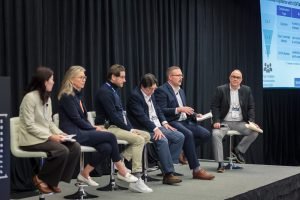
The presenters later joined together on stage for a panel discussion that included an engaging Q&A with the audience. The diversity of the participants created a complete picture of how sustainability and innovation intersect in our industry. The session also included an update from member companies of the Sustainable Optical Fiber Industry Alliance (SOFIA), including Dan Messmer, sales manager, Borealis; Marie Ange Vatin, global sales manager fiber optic material, Covestro; Ruben Rivera, specialty fiber sales manager, Heraeus; Alain Giraud, sales director, Nextrom; and Sayaka “Norah” Noda, assistant manager & sustainability lead, optical fiber group, Sumitomo Electric. Concluding the session were four technical paper presentations on topics ranging from recyclable polyolefins to sustainable cable design and cable scrap. Presenters included Yazan Saran, recent graduate, Virginia Polytechnic Institute; Lucas Nogueira, head of R&D, Prysmian; and Tom Schelling, senior technical service associate, Teknor Apex Company.
A consistent theme across the session was moving sustainability from narrative to measurable action. The discussion focused on turning ambition into data-driven decisions through material design, validation, and collaboration across the supply chain. Jon Mello, global marketing manager for wire and cable compounds at Teknor Apex, and moderator of the sustainability session, says, “IWCS continues to play a key role in keeping the industry aligned with emerging trends like sustainability and circularity.” He continues, “By fostering technically credible dialogue that bridges science, engineering, and strategy, IWCS ensures these topics stay at the center of innovation in wire and cable.”
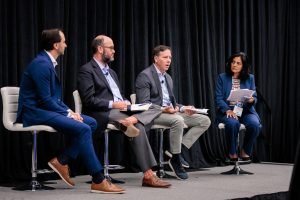
The third and final trend session, “Powering the Grid of the Future – Smart Connectivity, Resilience & Innovation,” took place on Thursday morning. Travis Kavulla, vice president of regulatory affairs at NRG opened the session with a keynote talk focused on policy and regulations that require the grid adaptations to redirect power in case of emergencies. Kavulla used the catastrophic 2021 power crisis in Texas as an example of a “wake-up call” that has led companies and policies to prioritize residential power supply in critical times. Grid modernization is needed to reinforce the existing infrastructure to create a safer and more reliable ecosystem.
Appropriately, a panel discussion on the theme of smart grid evolution followed. Rashmi Varma, CEO of QuantaWatt, moderated a discussion with Kavulla, Chris Bondurant, CEO of SAC Wireless, and Sergey Golubtsov, commercial senior manager at Prysmian. The panelists agreed on the need for collaboration between policymakers, cable manufacturers, and installers, as well as partnerships with related industries such as renewable energy, oil, and gas. Golubtsov rhetorically challenged, “What can we learn from utilities and similar industries?” An audience member followed up with a question asking which should come first—the policy or the solution required to deliver more reliable grid infrastructure.
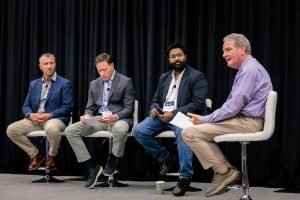
Bondurant remained on stage for a second panel discussion focused on the use of digital twins and AI to improve reliability of the grid. He was joined by moderator David Kiddoo, CEO of IWCS and executive director of CCCA; Craig Cavey, COO of Talon Aerolytics, and Rishi Sharma, CEO of Faclon Labs. Panelists again agreed on the need for partnership and shared data between all players in the utility and telecom space. There’s an opportunity for a more efficient practice by creating a new open data business model in which separate stakeholders can subscribe to receive shared data. Deploying digital twins can be helpful but as Sharma declared, “If you don’t get the data right, all the downstream solutions fall apart.” The grid session concluded with spotlight talks from Golubtsov and Kevin Chen, scientist at Idaho National Lab and professor at the University of Pittsburgh, on the use of sensors for improved monitoring and intelligence for the electrified grid.
Varma commented on the overarching theme that came out of the session, “Building a resilient and intelligent grid requires not only advanced technologies—such as AI, digital twins, and private LTE—but also accurate, trustworthy data and cross-industry alignment to ensure those tools deliver real value.” By continuing these discussions, IWCS will do its part to continue the dialogue and build relationships not only within the cable industry but also with critical adjacent industry players such as utilities and those influencing public policy.
Afterall, providing a broader scope for improved collaboration and future visions is the reason why IWCS recently added the trend sessions into its annual program. Attendees commented on the success of these special sessions and expressed a desire to participate in similar dialogs that can only be found at future editions of the Cable & Connectivity Industry Forum. Stay tuned for the announcement of the special sessions that will be included in IWCS’s 75th anniversary event, taking place November 1-4, 2026 in Orlando, Florida.
Additional News

New “Hot” Topics Identified for IWCS’s 75th annual Technical Symposium
IWCS calls industry professionals and academic researchers to submit a brief 300–500 word abstract summarizing…
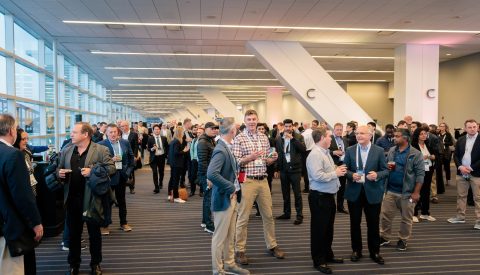
New Location is a Hit for the 74th Annual IWCS Cable & Connectivity Industry Forum
A new location was just one of the novelties for the 2025 edition of the…
Registration Opens for the 2025 IWCS Cable & Connectivity Industry Forum with Discounted Rates
Registration for the 74th annual IWCS Cable & Connectivity Industry Forum is now open, with…