
With many thanks to our sponsors, IWCS delivers consistent monthly webinars focused on sharing important educational content to help advance the cable & connectivity industry. Use the category filters listed below to display Technical Paper Spotlight and Supplier Spotlight presentations. You may filter the on-demand webinars by topics such as: Codes & Standards, Connectivity, Copper Cable, Industry Trends, Materials, Optical Cable, and Optical Fiber.
Upcoming Live Webinars
Core Identification and Geometry Specifications in Multicore Optical Fibers
The common approach for specifying core geometry in multicore optical fibers (MCF) is to use the core radial position (relative to the cladding center) and the pitch between core pairs. This works well to describe the nominal MCF features but is inadequate to properly tolerance the core positions (i.e. restrict core positional errors in a manufactured MCF). A better approach is to perform an optimized alignment of the manufactured MCF against a “master” template of the MCF design core positions. This approach produces consistent, easily understood limits on core positional errors and generalizes to more complicated core patterns.
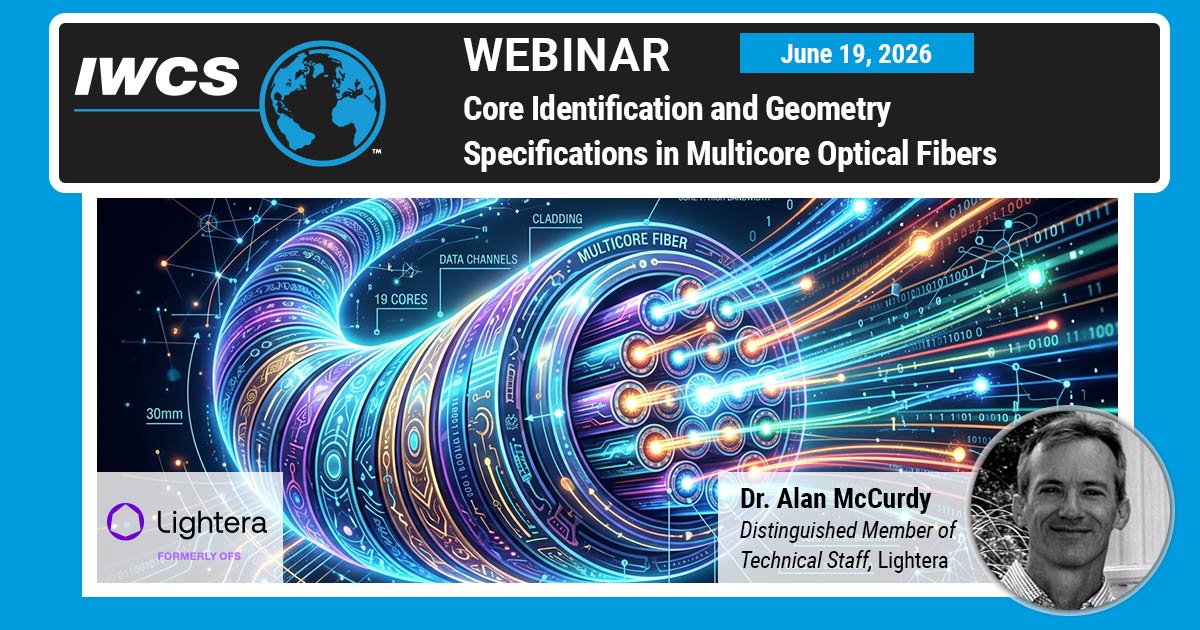
The common approach for specifying core geometry in multicore optical fibers (MCF) is to use the core radial position (relative to the cladding center) and the pitch between core pairs. This works well to describe the nominal MCF features but is inadequate to properly tolerance the core positions (i.e. restrict core positional errors in a manufactured MCF). A better approach is to perform an optimized alignment of the manufactured MCF against a “master” template of the MCF design core positions. This approach produces consistent, easily understood limits on core positional errors and generalizes to more complicated core patterns.
Sustainable Options for Crosslinked Polyethylene (XLPE) Cable Scrap
Crosslinked polyethylene (XLPE) is widely used in energy cables but is difficult to recycle due to its thermoset nature. As a result, thousands of tons of XLPE waste are landfilled annually. This study investigates a sustainable recycling strategy by mechanically reducing XLPE waste into powder and blending it with polypropylene (PP) to create an injection-moldable composite. An experimental matrix of blends was created to evaluate the effects of XLPE particle size and weight percentage on mechanical and rheological properties. Characterization techniques included tensile and impact testing, melt flow index, and oxidative induction time. Results show that XLPE content significantly affects flow behavior, while particle size plays a larger role in mechanical performance. Optimized blends demonstrated suitable properties for use in non-electrical applications such as cable spool manufacturing. This approach presents a potential avenue for large-scale reuse of XLPE scrap in the wire and cable industry.
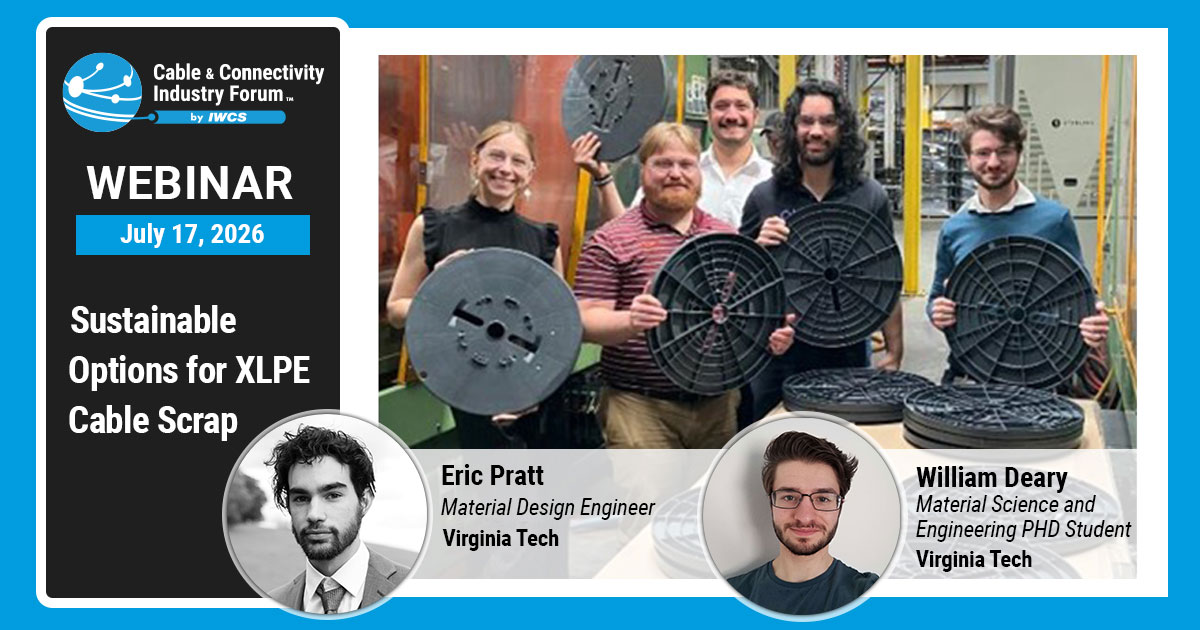
Crosslinked polyethylene (XLPE) is widely used in energy cables but is difficult to recycle due to its thermoset nature. As a result, thousands of tons of XLPE waste are landfilled annually. This study investigates a sustainable recycling strategy by mechanically reducing XLPE waste into powder and blending it with polypropylene (PP) to create an injection-moldable composite. An experimental matrix of blends was created to evaluate the effects of XLPE particle size and weight percentage on mechanical and rheological properties. Characterization techniques included tensile and impact testing, melt flow index, and oxidative induction time. Results show that XLPE content significantly affects flow behavior, while particle size plays a larger role in mechanical performance. Optimized blends demonstrated suitable properties for use in non-electrical applications such as cable spool manufacturing. This approach presents a potential avenue for large-scale reuse of XLPE scrap in the wire and cable industry.
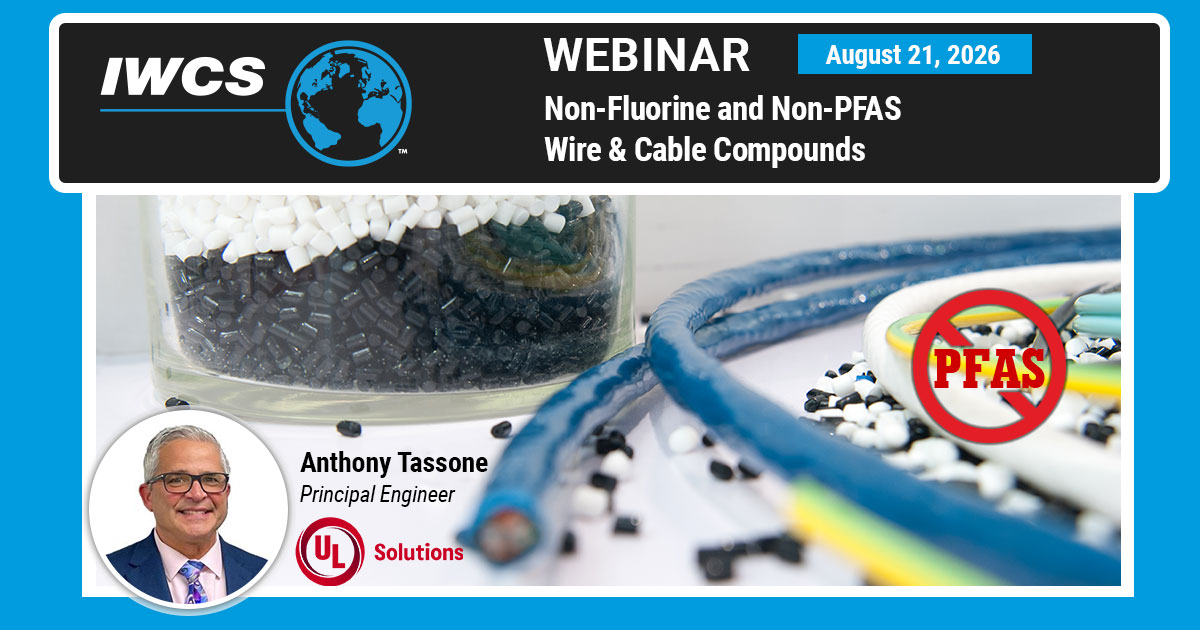
Non-Fluorine and Non-PFAS Wire & Cable Compounds
This presentation will cover the background of PFAS, various local, state, and country regulations, and the testing and certification requirements for compounds used as insulation and jacket materials in wire and cable. The update will include information concerning the chemical composition of Perfluoroalkyl Substances (PFAS), common uses of the substance, PFAS Regulations in Europe, PFAS Regulations in the US, various PFAS bans, PFAS Testing Strategies and test capabilities for PFAS and Fluorine at UL.
UL Solutions is an independent organization that has been evaluating products in the interest of public safety for over 130 years. UL Solutions staff are involved in many aspects of the wire and cable industry and have worked with code authorities, manufacturers and various technical committees to develop safety Standards for wire and cable.
This presentation will cover the background of PFAS, various local, state, and country regulations, and the testing and certification requirements for compounds used as insulation and jacket materials in wire and cable. The update will include information concerning the chemical composition of Perfluoroalkyl Substances (PFAS), common uses of the substance, PFAS Regulations in Europe, PFAS Regulations in the US, various PFAS bans, PFAS Testing Strategies and test capabilities for PFAS and Fluorine at UL.
* IWCS, Inc. produces an annual forum for the presentation and discussion of key technology developments for the wire, cable and connectivity industry. In providing such a forum, IWCS neither endorses, sanctions, nor recommends any technical developments described in the presented work. IWCS also neither recommends that parties make development plans nor that they make purchasing decisions based on any work presented in written, live or video formats observed as part of our forum.